The Author
Zechariah means “Yahweh remembers.” It is a name filled with hope, reminding the many people who felt God had abandoned them during the seventy long years of exile in Babylon that God will exercise His “grace,” or “covenantal love” (hesed); He will not forget His own.
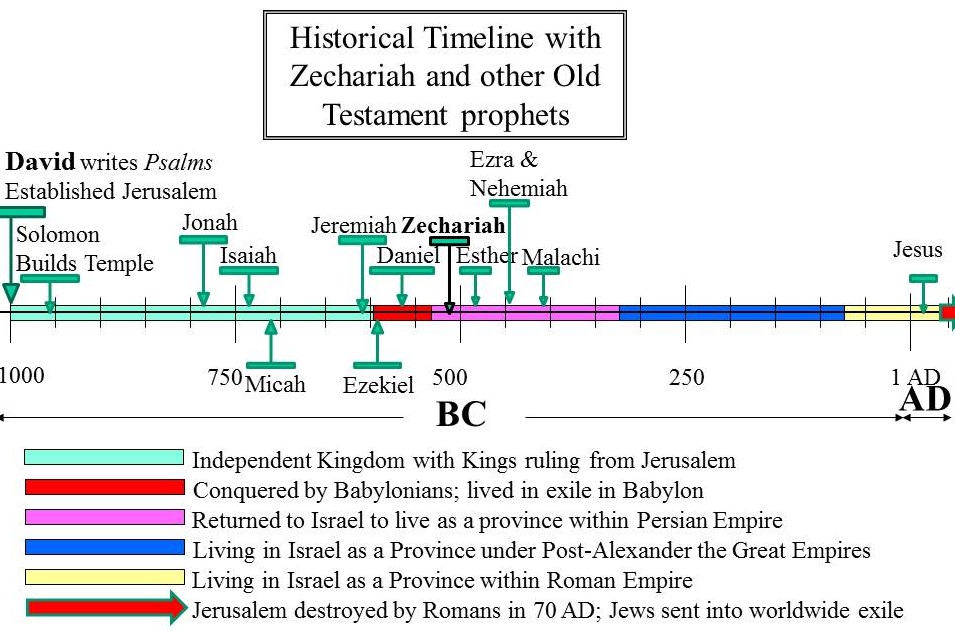
Zechariah was a prophet / priest, the son of Berekiah, the son of Iddo (1:1). Zechariah is mentioned alongside Haggai in Ezra 5:1 and 6:14, and he played a role in the restoration of the postexilic community.
Nehemiah speaks of an Iddo who is one of the heads of the priestly families that returned to Judah from Babylon (Neh. 12:4, 16). If this is the same Iddo, and it appears it is, then Zechariah was from the tribe of Levi and therefore served as a priest as well as a prophet. Other prophets in the Old Testament similarly had a dual role of priest and prophet: e. g., Jeremiah (Jer. 1:1) and Ezekiel (Ezek. 1:3)
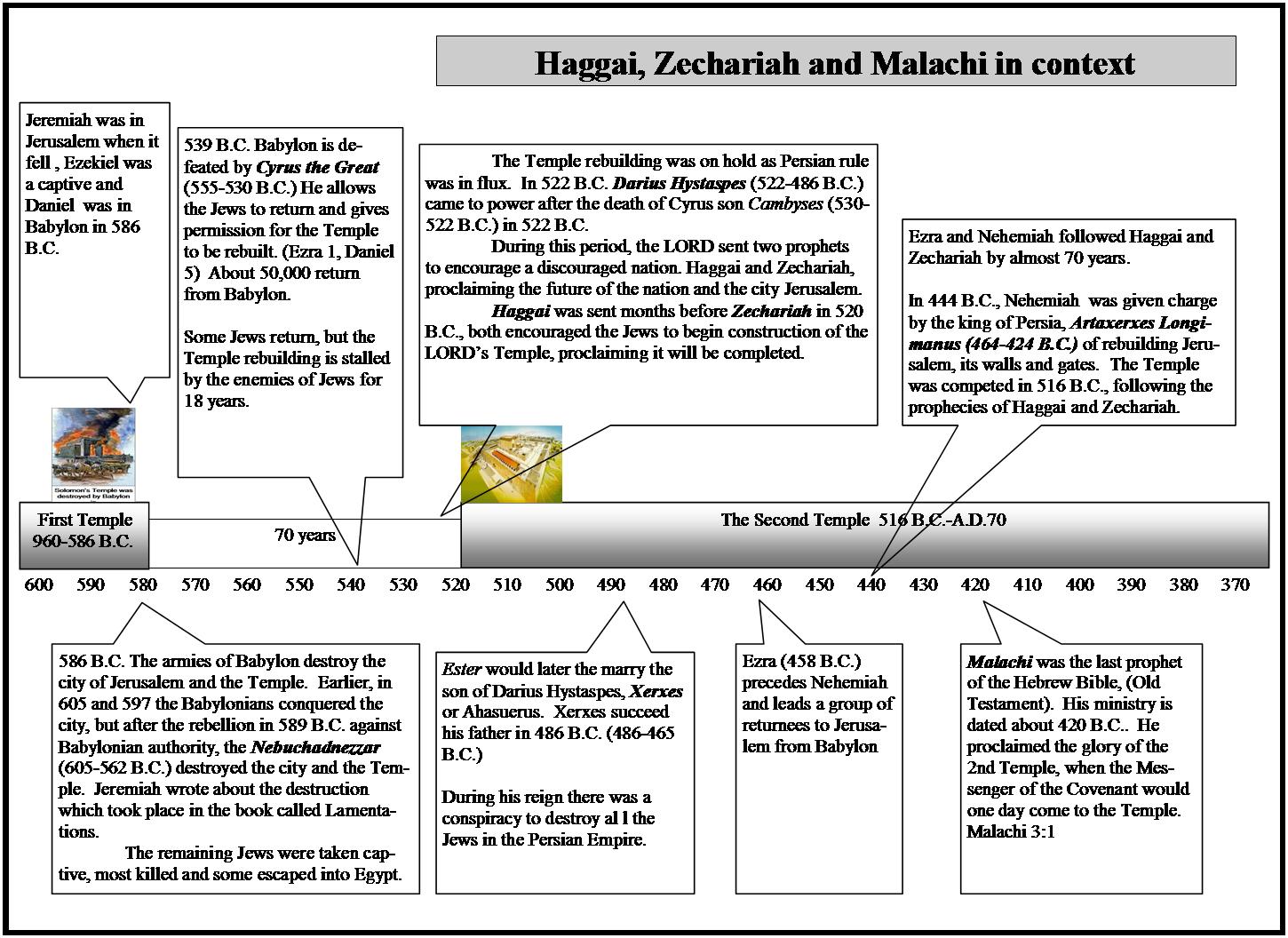
Zechariah began his ministry “In the eighth month of the second year of Darius,” which would have been November, 520 B. C. Thus he entered his prophetic ministry two months after his contemporary, Haggai. Haggai commenced his labors on August 29, 520 B. C. (Hag. 1:1), and his first revelation was followed by additional words from our Lord on September 21, 520 B. C. (Hag 1:15), October 17, 520 B. C. (Hag. 2:1), and twice on December 18, 520 B. C. (Hag. 2:10, 20). Zechariah received his first message after Haggai received the message given in Haggai 2:1–9 and before Haggai received his last messages (Hag. 2:10–19, 20–23).
The prophecies of chapters 1–8, dated in the text (1:1, 7; 7:1), were delivered from 520 to 518 b. c. Those of chapters 9–14, on the other hand, are undated, and there are reasons to believe that Zechariah wrote these later chapters long after the initial eight. It is perhaps significant that Zechariah and Haggai did not undertake any leadership role in the community until 520 b. c., about 18 years after the return from exile (c. 538). The suggestion that they were children at the time of the return is probably confirmed in 2:4, where the prophet in 520 b. c. is called a “young man."
While the first eight chapters of Zechariah’s prophecy were written in 520 B. C., chapters 9–14 may have been, and probably were, composed much later, in Zechariah’s old age. Some conservatives suggest this may have been as late as 480 to 470 B. C. If Zechariah was around thirty years old when he wrote the first eight chapters, he must have been around seventy years old when he wrote the last six chapters. If so, the composition of chapters 9–14 would have taken place in the days when the Persian empire was waning, perhaps after the revolt of Egypt in 486 B. C. and the death of Darius in 485 B. C. The changes in the author’s age and in the political circumstances of the empire arguably account for the differences in style, outlook, and themes found in chapters 1–8 and chapters 9–14.
AUDIENCE
Zechariah encouraged the Jews who had returned from exile in Babylon to complete the rebuilding of the temple. He also prophesied concerning Jerusalem’s future place in God’s kingdom.

History
Zechariah was a contemporary to Haggai, but his prophecies spanned a longer amount of time than those of his fellow prophet. Zechariah’s most immediate concern was the rebuilding of Solomon’s temple.
Like Haggai, Zechariah develops the messianic theme, although he does so much more extensively. Messiah’s coming would be God’s answer to all the political challenges that had arisen to dash the hopes of the fallen kingdom and the throne of David.
Zechariah continued to minister long after Haggai’s short five-month ministry from August 29 to December 18, 520 B. C. Zechariah’s ministry may have stretched as long as fifty years, from 520 B. C. to 470 BC.


No comments:
Post a Comment